Criminology
at Missouri State University
Springfield, Missouri 65897
       Phone: 417-836-5640   Fax: 417-836-6416 

Criminology Advisement Page
Home | Contact Us | Courses | Major | Minor | Internships | M.S. in Criminology | MSAS Degree
Our Faculty | Careers | Student Travel | Student Organizations | Scholarships | Professional Associations

Other Degrees of Possible Interest to CRM Students


Welcome to the Criminology program at
Missouri State University!

Welcome! Welcome to the Internet home of the Criminology program at Missouri State University. Perhaps you are already one of our several hundred academic majors or minors. Or maybe you are considering attending Missouri State and becoming a Criminology major or minor. Whatever the case is, we're happy to have you here!

The Criminology program at Missouri State offers undergraduate and graduate degrees and two graduate programs in a dynamic and enjoyable setting.


  •  Join us Online: Criminology Alumni on Facebook
     

  • Learn more about our special High School
    CSI Springfield Summer Camp!
     

  • February 25th, 2010! 
    Be sure to attend the 2nd Annual Missouri State University Criminology and Criminal Justice Conference. This year's theme is "Community: An Invaluable Criminal Justice Resource " More information to follow.

Why Study Criminology at Missouri State?

For the faculty and students at MSU the answer to this question is obvious. We have a terrific program! And here's why.

The Criminology Faculty:
We have created a robust, interesting and useful program of study in the field of criminology and criminal justice. All aspects of the justice system are explored (i.e., law, law enforcement, courts, corrections, community involvement, prevention, etc.) as is the area of criminology (why people behave the way they do). Our faculty are experienced in the field of criminology / criminal justice and are dedicated to their teaching, advising, research and service endeavors.

Among the intellectual, teaching and research interests of our faculty are:
 

  •  justice and inequality

  •  crime control policy

  •  juvenile delinquency, juvenile justice, juvenile policies and programs

  •  criminological theory

  •  experimental criminology

  •  criminal typologies (profiles)

  •  public attitudes toward the sentencing of juveniles

  •  criminal justice ethics

  •  prison reform

  •  prisoner re-entry into society

  •  institutional and community-based corrections

  •  the prison-industrial complex

  •  homeland security

  •  terrorism

  •  the gang phenomenon

  •  research methods and program evaluation

  •  restorative justice

  •  crime prevention

  •  the nature of policing

  •  the impact of drugs on society

  •  the use of instructional technology in criminal justice education

  •  job development in criminal justice and obtaining jobs in the field

Our Community Partners:
Springfield, Missouri, is a community of about 300,000 people and, as a result, we have a wide range of criminal justice agencies in our community. This is relevant to our students as we incorporate representatives from these many agencies into our classroom presentations. We also bring these representatives to campus to make presentations out of class and to meet with our students individually. In several of our courses, and through our students' Criminal Justice Society, we visit some of agencies from which the representatives come. Among our community partners are:

  •  As concerns Law and the Courts our community partners include:

Greene County Criminal Courts
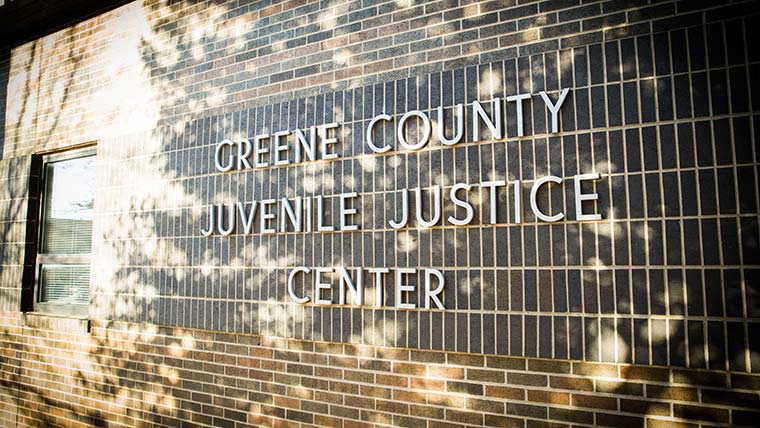
Greene County Juvenile Court
Greene County and Springfield (City) Prosecutors' offices
The Public Defenders Office

  •  Related to Law Enforcement, among others, our community partners include:

Drug Enforcement Agency (DEA)
Federal Bureau of Investigation (FBI)
United States Marshals Service
United States Border Patrol
National Park Service
Missouri Highway Patrol (Troop D)
Greene County Sheriff's Office (and surrounding county sheriffs' offices)
Springfield (MO) Police Department (and surrounding city police agencies)
Several private/corporate security operations

  •  As concerns Institutional and Community-Based Corrections our community partners include:

    Federal Bureau of Prisons (The U.S. Medical Center for Federal Prisoners)
    Missouri Department of Corrections (Ozark Correctional Center)
    Missouri Department of Probation and Parole (District #10 and #10R)
    Missouri Division of Youth Services
    Other community-based treatment programs including services related to substance abuse, family violence, child abuse, illiteracy, school failure, conflict management and resolution, restorative justice, drug court, family court, mental health court and more.

The Resources our Students Have:
In addition to having access to so many justice-related agencies and an outstanding faculty, the Criminology (CRM) Program offers a wide range of undergraduate and graduate courses, excellent library resources, a state-of-the-art office- and classroom facility (shown on the left and right below), an elective internship in the field (for CRM Majors only), active student organizations (like our Criminal Justice Society), scholarships, excellent one-on-one advising in the department, and all of this is set in the youthful, beautiful, and exciting community of Springfield, Missouri.

Our Community Setting:
Known for its parks, public libraries, excellent shopping, live theater, ballet and opera, restaurants galore, lakes, rolling hills, forests, fishing, skiing, boating, swimming, biking and hiking trails and other outside sports, Springfield has much to offer.

The Criminology Program!:
Our Criminology program offers a non-comprehensive major (34 hours of CRM courses) and a minor in Criminology  (21 hours) as well as a Master of Science in Criminology and a Master of Science in Administrative Science with a Criminal Justice Component. MSU, as you probably know, offers a wide variety of academic majors and minors which may also be of interest to those wanting a career related to the field of criminology.

Our Students!:
Last, but certainly not least, are the students in our undergraduate Criminology Program and the students in both of our graduate programs - the Master of Science in Criminology Program and Master of Science in Administrative Studies Program. They are a hard working bunch - taking classes, volunteering in the community and on campus, interning and otherwise advancing their knowledge about crime and justice in society and their public affairs contributions. We have literally hundreds of undergraduate students and a vibrant and serious group of graduate students.


Some of our CRM students during
their food drive for a local food bank.


The undergraduate degree program in Criminology emphasizes the importance of bringing a variety of perspectives to the study of crime and justice. The faculty who teach our Criminology courses have established records of achievement in both sociology and criminology.

Missouri State University offers baccalaureate degrees in 83 disciplines, several of which coincide meaningfully for Criminology students who wish to complete a major or minor in addition to their major in Criminology. Likewise, students minoring in Criminology should have no difficulty in finding one or more majors suitable for their graduate study and/or career plans.


Strong Hall


Exterior of
Strong Hall

Strong Hall Atrium
Strong Hall
Atrium


Important Note on G.P.A. requirements in the CRM program.

All students at MSU must maintain at least a cumulative 2.0 grade point average to graduate. In addition, Criminology majors, in order to graduate, must maintain no less than a 2.5 grade point average in the courses taken for the Criminology major.

Other websites of interest to CRM students include:

Department of Sociology, Anthropology and Criminology
Missouri State University

Contact Us

Last update: 17 November 2009